


John Swinney has pledged to work “very closely” with Glasgow City Council as it faces a £110 million financial black hole.
The First Minister said he would engage with the local authority to ensure it “reaches a position of financial sustainability”.
It came after a report warned the council “faces a number of significant financial challenges in the coming years” which could impact its ability to deliver core services.
The Accounts Commission said Glasgow City Council had recorded a net overspend of £45.7 million in 2024-25, which it said was “the highest overspend incurred by the council in the last six years”.
Looking ahead, the watchdog said the authority “currently does not have established longer term financial planning arrangements”, adding that projections show it could be facing a combined net budget gap of £109.7 million for 2026-27 and 2027-28.
Speaking to the Press Association during a visit to Dundee on Thursday, Mr Swinney was asked whether he would give Scotland’s largest council more money.
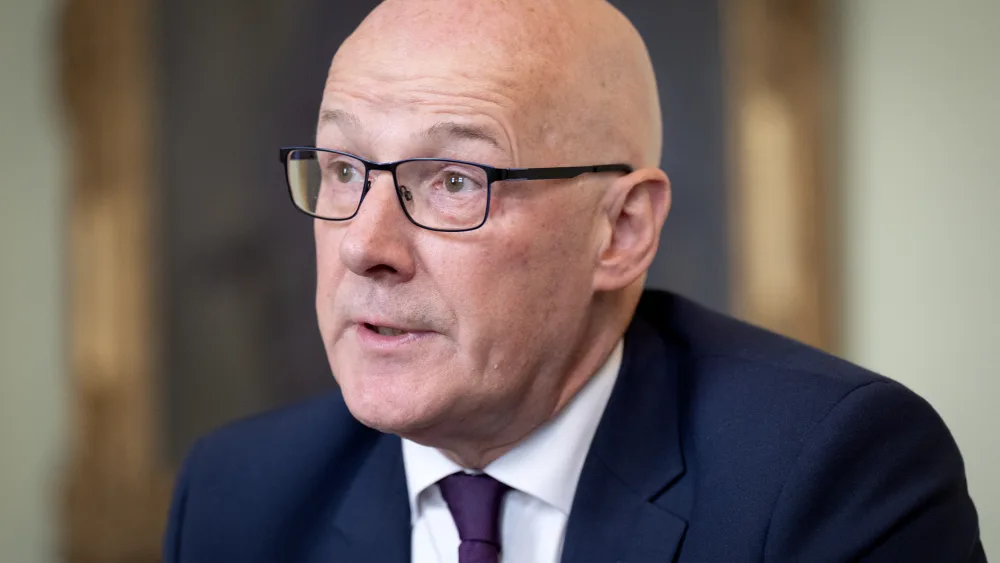
He said: “We obviously work very closely with Glasgow City Council and other local authorities around the country to maximise the financial support that we make available to individual local authorities.
“Glasgow, as the Accounts Commission report indicates, is dealing with some very significant financial pressures, not least of which from the implications of resolving the equal pay claims that the city council has been wrestling with.
“We will of course work very closely with the city council in making sure that it reaches a position of financial sustainability, and the Government, of course, is strongly supporting local authorities with financial assistance.”
The Accounts Commission report said Glasgow City Council is facing major financial pressure, including from equal pay claims and homelessness.
On homelessness, spending increased from £38 million in 2025-26 to an expected £56 million in 2026-27, and will hit almost £75 million in 2027-28.
The rise in homelessness applications has been linked to the asylum backlog in the city, which houses most of Scotland’s asylum seekers.
SNP councillor Richard Bell, expected to be the next leader of Glasgow City Council, has said “Glasgow is carrying the burden for the whole of Scotland” in housing asylum seekers.
Glasgow City Council is at a critical point as it tries to tackle financial pressures, rising homelessness, growing demand for services, persistent high poverty levels and unresolved equal pay claims.
These significant challenges must all be dealt with at the same time.1/2 pic.twitter.com/BYJNUExJj7
— Audit Scotland (@AuditScotland) September 3, 2026
“That can’t be right,” he told the BBC’s Radio Breakfast Scotland. “It can’t fall on the taxpayers of Glasgow to support all of these people across the whole country.”
Mr Bell said Finance Secretary Jenny Gilruth had promised to make a “meaningful contribution” towards Glasgow’s costs.
He said: “We’re now in very close discussions with the Government about what ‘meaningful’ means, so that we can actually tie that down to a pounds and pence contribution.”
He said the Scottish Government must either change its homelessness legislation or fund its consequences, adding: “At the moment, we’re kind of in the middle of that, and they’re doing neither.”
Mr Swinney pinned the blame on the UK Government, which controls the asylum process.
He told PA: “What’s happened is that the Home Office and the way in which they’ve taken forward the decisions about leave to remain have essentially created a significant implication for public services without the financial support to address those issues.
“The city council is absolutely right to press the Home Office to make sure that it addresses the implications of the decisions the Home Office have made, which is a reasonable expectation for Glasgow City Council to have.”
Accounts Commission deputy chairman Andrew Burns said the council is “at a challenging point”, adding: “Decisions made over the coming months will have a significant bearing on financial sustainability and on the services that communities receive in future.
Read the Accounts Commission’s Best Value report on Glasgow City Council here: https://t.co/7OqzVDFXvR2/2@COSLA @improvserv @ScottishCCs @TSIScotNet @Enable_Tweets
— Audit Scotland (@AuditScotland) September 3, 2026
“There is no doubt about the scale and complexity of the challenges that Glasgow City Council faces, particularly equal pay and homelessness.”
Delivering the new pay and grading structure for workers by April 2027 is seen as “critical”.
However the report added the authority’s cash reserves “continue to decline” and are “below the target set” by the council.
The report went on to warn Glasgow “continues to face significant risks in the medium and longer term, including its ability to generate new sources of income at the pace required within the budget”.
It said the authority faces the financial implications of “both the implementation of the new pay and grading scheme, including backdated pay, projected rates of homelessness within the city and the wider external funding uncertainty”.
The Accounts Commission concluded: “There is a need for a robust longer-term financial strategy to demonstrate how council priorities will be achieved across a range of scenarios.”
Mr Burns said “leadership, responsibility and robust oversight” is needed from councillors.
A UK Government spokesperson said: “We are committed to successfully transitioning refugees from asylum accommodation and mitigating the risk of homelessness. That is why we extended the grace period from 28 days to 42.
“We are closing every asylum hotel and moving asylum seekers into alternative accommodation, including former military sites.
“We are working to fairly house asylum seekers across the country, engaging with local authorities to reduce the impact on communities.”