


Permission has been requested for the traditional guga hunt to take place this summer.
The hunt has been an annual tradition in Ness, north Lewis, since the 15th century, with 10 men setting out for the rocky island of Sula Sgeir 40 miles away.
Young gannets – guga – are taken from open cliffs using a pole and noose, before being gutted, salted and preserved in brine.
Uninhabited by humans, Sula Sgeir is home to thousands of pairs of breeding gannets.
Traditionally, the birds formed an essential part of the winter diet for the people of Ness, but guga is now regarded as a delicacy by some, although it is said to be an “acquired taste”.
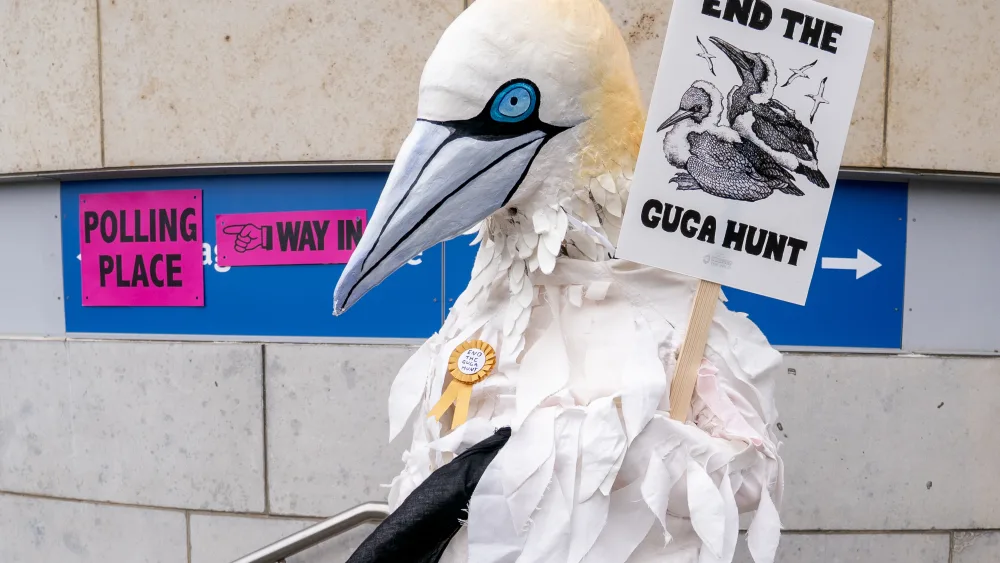
NatureScot issues licences for the hunts and has said it is assessing the latest application.
In a NatureScot report published on Thursday, officials said: “We have now received an application for a 2026 licence which we are currently assessing.
“The NatureScot board has confirmed that it will take the decision on whether to grant the licence when the assessment has been completed.”
Last year the agency granted a licence allowing up to 500 birds to be killed, with a total of 485 culled at the 2025 hunt.
In March, activists protested outside the Scottish Parliament as a petition to end the guga hunt passed 100,000 signatures.
The protesters had tape over their mouths and held signs reading “Don’t silence us” as they raised concerns the petition would be delayed by the Holyrood election in May.
The Public Petitions Committee is considering the petition.
The killing of wild birds in Scotland is illegal. However, the guga hunt falls into legal exemption in Section 16 of the Wildlife and Countryside Act (1981), specifically allowing gannets to be taken from the island of Sula Sgeir for the purpose of human consumption, as per historical tradition.