

A human rights body has warned of “clear human rights failures” in the south of Scotland, where it says many people are struggling to access basics such as food, housing and health.
The Scottish Human Rights Commission (SHRC), which has authored a new report on the region, said public authorities are “not fully realising” the economic, social and cultural (ESC) rights of people living there.
The study found people in the area are losing public services, including health and social care, and that some people are living in “hidden homelessness”.
This new report highlights the gaps between the rights we are all entitled to and the lived reality of people’s lives across the south of Scotland
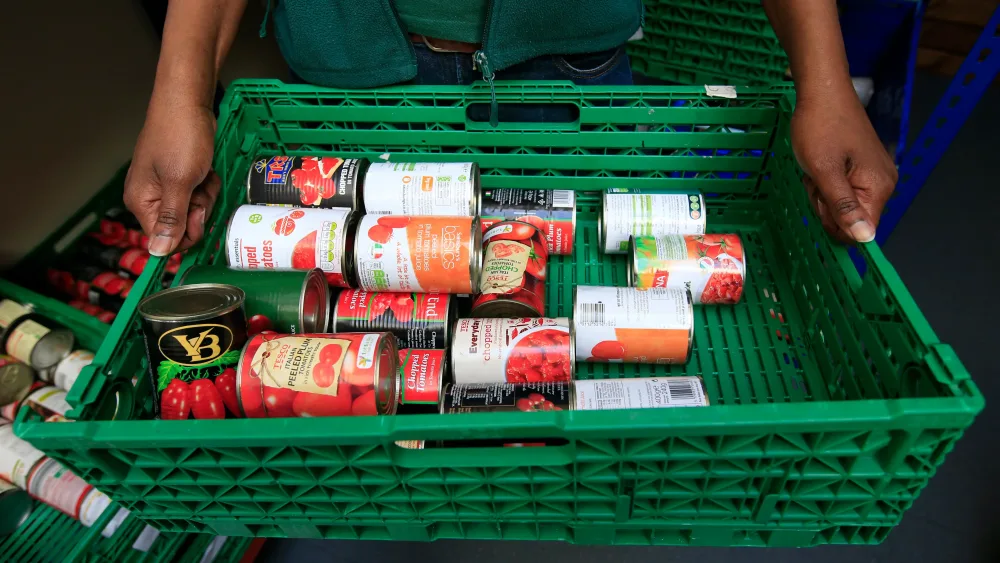
A survey done as part of the study found more than half of respondents (55%) were also worried about affording food, while just under half (46%) rely on a food bank or know someone who does.
One respondent is quoted as saying: “Food is generally far too expensive. I have to limit my spending as a low-income person… families have to spend such a big percentage of their earnings on food.”
Another said: “There are some good voluntary services, but we should not have to rely on volunteers for basics like food.”
SHRC chairwoman Professor Angela O’Hagan said: “Economic, social and cultural rights are about our everyday lives and that means access to food, housing, transport and education, and even water.
“This new report highlights the gaps between the rights we are all entitled to and the lived reality of people’s lives across the south of Scotland, as their testimonies show.
“It is also a call to action for public authorities who manage and deliver services and who are duty bearers with obligations to protect and deliver on human rights obligations.

“People in the south of Scotland told us they feel distant from decision making.
“This report is about amplifying their voices and taking the evidence direct to the Scottish Parliament.”
The region covered by the study stretches “from the English border to the outskirts of Glasgow and Edinburgh”, and is home to some 1.1 million people across eight local authority areas.
The report lists the three main barriers to people’s rights in the area as “accessibility”, “affordability” and “fragility”, which it defines as follows:
– Accessibility: poor transport – including ferries – centralised services and digital exclusion keeping people from the services they need.
– Affordability: rising costs force people to choose between food, heating and housing.
– Fragility: too much support depends on short-term funding, volunteers and goodwill rather than sustained public investment.
The report says many of these stem from inequality, with poverty, insecure incomes and low paid or insecure work making it harder for people to meet their basic needs.
This is in addition to rising food and energy costs.
The report acknowledged some progress on ESC rights across the region, thanks to the efforts of public bodies, communities and civil society groups.
However, it said these are often “not enough” to ensure the sustainable and consistent provision of essential services.
📢 We've concluded our fact-finding visit to the South of Scotland!
A huge thank you to everyone who took the time to speak with us.
To find out about the next steps for the project, or to find the survey, visit our website:https://t.co/w685vKSuiO pic.twitter.com/O2KXT5CrlP
— Scottish Human Rights Commission (@ScotHumanRights) March 25, 2026
“Overall, many communities and duty bearers are working hard to protect dignity and human rights in challenging circumstances,” the report said.
“However, we found clear human rights failures.”
The SHRC has called for the Scottish Government, local councils, NHS boards and others to “act urgently” to address the situation.
This includes calls for the strengthening of human rights laws, and for public service reform to improve people’s access to basic ESC rights.
A Scottish Government spokesperson said: “Ministers have made clear again this week that that their priority is to create a fairer, more prosperous Scotland.
“That is why overall in 2026-27 we are committing around £3.5 billion to policies that tackle poverty and the cost of living, including maintaining our investment in the Scottish Welfare Fund at £41 million and funding free bus travel for over 2.4 million people.
“We are also consulting on proposals to make essential food items more affordable for households struggling to pay for their weekly shop, particularly those on lower incomes.
“This report demonstrates the importance of sustaining progress to advance how people experience their human rights across the south of Scotland and we will consider its recommendations carefully.”