

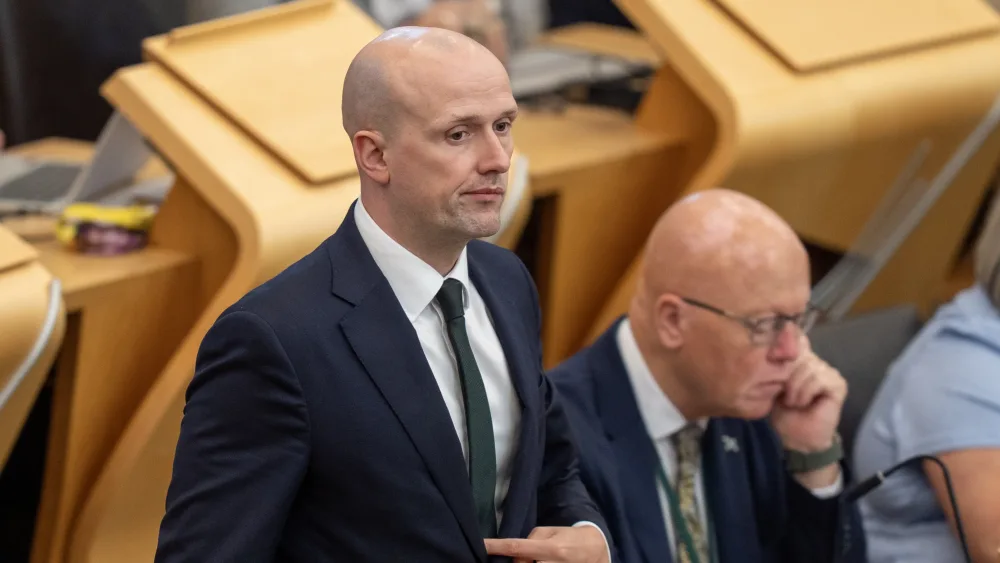
The Scottish Government will “explore every option” to save the 377 workers at risk from the planned closure of a chemical manufacturer in Grangemouth, Stephen Flynn has said.
The Economy Secretary said Syngenta’s decision to consult on the closure was “deeply concerning” and a “profound disappointment”.
The company, owned by Chinese state-owned conglomerate Sinochem, announced plans last week to close the site by the end of 2027.
It said Grangemouth was significantly more expensive to operate than other production sites.
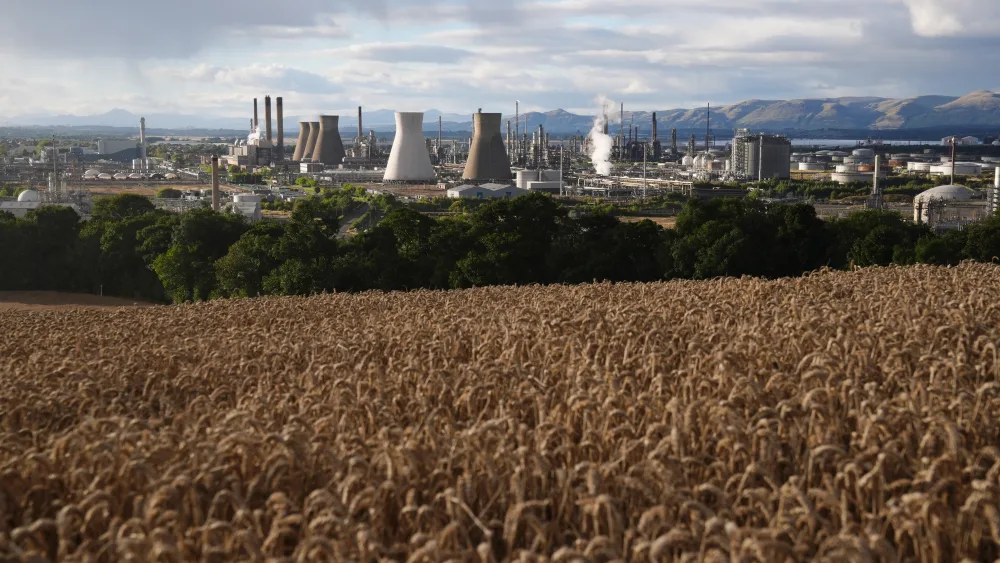
In a statement to the Scottish Parliament on Tuesday, Mr Flynn said: “I want to place on record my profound disappointment at the decision to enter into consultation with the workers, which adds further urgency to cross-government work to secure a positive future role for Grangemouth.”
The minister said his thoughts were with the workers and their families “now facing an uncertain future”.
He added: “I give workers at Syngenta my assurance that this Government will do all it can to secure a future for the site by working with the company, other businesses and key stakeholders to explore every option for continued operations over the coming months.”
He said that both the Scottish and UK governments had approached Syngenta in September about support for the site.
“Despite those efforts, it is disappointing that neither government received substantive feedback on our offer, nor any indication from Syngenta on the board’s position prior to being informed of the proposed consultation last week,” Mr Flynn added.
Just over a year ago, Syngenta was awarded more than £2 million by Scottish Enterprise to expand its operations in the country. The firm said about half of this had been paid out and it pledged to pay the funding back in full if the site closes.
Mr Flynn said he had written to Scottish Enterprise “to ensure that no stone is left unturned in its efforts to retain operations in at least some form on the existing site”.
The UK Labour Government has consistently professed that it supports Grangemouth, yet not one penny of the £200 million commitment from the National Wealth Fund has been deployed
He added that the Scottish Government “will ensure that no option for a sustainable future for the site is overlooked, and that workers will remain at the centre of our response”.
But he said “many of the challenges” facing the firm “lie outside devolved powers”, adding that he had written to the UK Government urging “meaningful action on Grangemouth.
Mr Flynn told MSPs: “The UK Labour Government has consistently professed that it supports Grangemouth, yet not one penny of the £200 million commitment from the National Wealth Fund has been deployed.
“That support is needed now to invest in the industrial cluster to ensure it is fit for the future.”
Syngenta has said “no final decision” has been made on the site and said it was “committed” to considering alternative options for the site.
It said it was facing increased international competition and that the site was expensive to run.
The move also comes a year after more than 400 workers lost their jobs as the Grangemouth oil refinery, Scotland’s last, closed.
The Unite union said it had pressed the Scottish Government on the “urgency of the situation” and “demanded that decisive action be taken by ministers to protect operations at the site”.
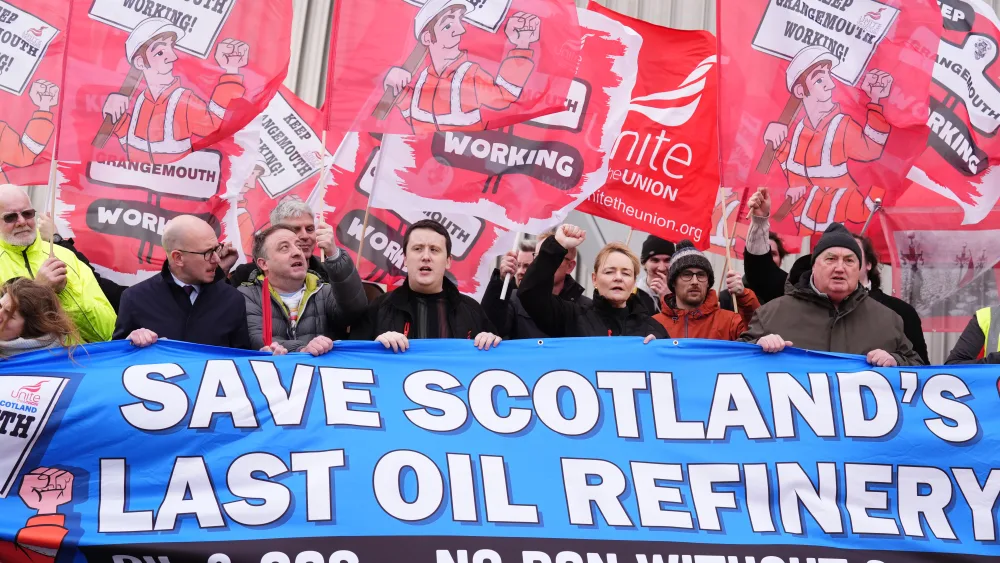
Scott Foley, industrial officer at the union, said Unite had requested a “detailed explanation of the economic case for closure from Syngenta along with the disclosure of other relevant financial information”.
“Further meetings are scheduled with Syngenta where we will press the case for a pause in the closure plans until every option is fully explored,” he said.
“Unite is fully committed to supporting our members at Syngenta and those employed within the contractor base and wider supply chain.
“We will leave no stone unturned in the effort to secure the most positive outcome for our members, and their families.”
Mike Hollands, president of Syngenta UK, previously said: “The workforce at Grangemouth is highly skilled and passionate but despite all efforts, we have not been able to make the Grangemouth site competitive compared to alternative supply options.
“It is with a very heavy heart that we make this proposal, but we are committed to a constructive consultation and will continue to consider options as part of that process.”
The Greens and Tories raised concerns about public funds being given to companies who later propose job cuts.
Green MSP Patrick Harvie said: “I think we are all agreed that the most urgent priority is the interest of the workforce whose livelihoods are on the line, but this is far from the first example of a company which has been willing to take public money and then leave its workforce behind when times get tough.
“Surely the Cabinet Secretary can agree that we need a much more systematic approach to ensuring that when the private sector wants public money, it comes with binding guarantees; both profit-sharing when there is success and protection for workers where there is failure?”
Conservative MSP Meghan Gallacher MSP said: “It is only right that this firm are paying back the taxpayers’ money they received, but serious questions remain about how much diligence the SNP carried out before that was handed out.
“With the oil refinery shutting down and jobs also being lost at the nearby Alexander Dennis site, there is a strong case for this money being used to deliver urgent investment and support for employment opportunities in Grangemouth.
“This matter is too serious for Stephen Flynn to try and deflect and point the blame at Westminster.
“He must pull out all the stops to support workers at this company and protect jobs across Grangemouth.”