

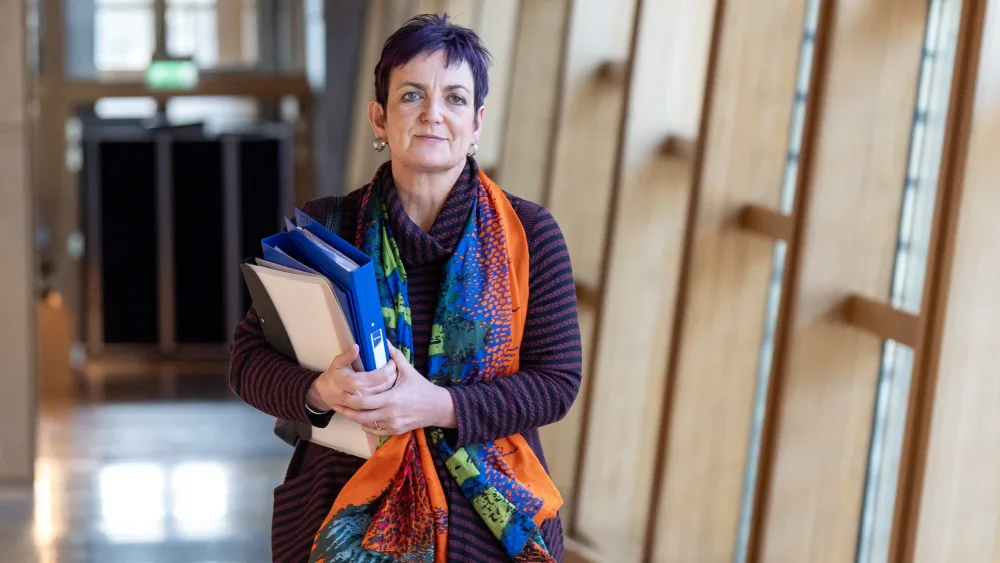
Scotland’s Health Secretary has said the reform of the health service is “not optional” if it is to be protected.
The Scottish Government is expected to go on a major restructuring drive in the NHS over the next five years, with plans already announced to cut the number of territorial boards from 14 to just two in a bid to streamline services and save money.
Making her first appearance before Holyrood’s Health, Care and Sport Committee on Wednesday, Angela Constance said the move was not about “centralisation” despite the shift from more distinct geographical boards.
Let's be candid - let's be absolutely candid... public sector reform is not optional
Under questioning from fellow SNP MSP Jack Middleton, Ms Constance said: “In terms of the current arrangements that serve the people in the north of Scotland, my rhetorical question to yourself and other MSPs is, how is that working for you just now?
“Because what I hear in the chamber in terms of the questions posed to me, in terms of the correspondence I receive from members of this Parliament and written and oral parliamentary questions is a dissatisfaction with the status quo.
“That very much applies in the north of Scotland as elsewhere.”
She added: “Let’s be candid – let’s be absolutely candid… public sector reform is not optional.
“That’s because we want to protect services in the north and elsewhere for the future.
“Our National Health Service is our most precious service and we need to protect if for the future.”
Reforms, she told the committee, would remove barriers to treatment for patients and, in some cases, provide a “once-for-Scotland” approach.
One of the major concerns with the reforms has been how it will impact the number of people working in the NHS, with the Government determined to reduce the headcount in the public sector as it wrestles with a near-£5 billion black hole in the public finances by the end of the decade.
But Ms Constance has suggested there is no guarantee that the number of staff in the NHS will need to reduce in the same way as the rest of the public sector, telling the committee decisions would not be based on “spreadsheets”, but on what is best for patients.
“What we’re doing just now is we’re agreeing a process with trade unions and let me again be clear that the starting point of all of this work is about improving patient care.
“It’s not actually about structures per se, and it’s most certainly not about spreadsheets.”
The Health Secretary added that she was “committed to a rigorous programme of engagement” with unions around the reforms.