


The principal of Dundee University has said he is “confident” most classes will go ahead, despite a five-week strike starting on Monday.
Members of the University and College Union (UCU) voted to strike as a result of the university’s massive drive to cut costs, which has seen almost one third of its workforce leave already.
The institution has faced the worst financial crisis in its history in recent years, which was blamed on governance issues of previous leaders.
I'm pretty confident that most classes will go ahead and we'll just have to see what the impact is
Speaking to BBC Radio Scotland on Monday, Professor Nigel Seaton said the university was “very substantially over-staffed” before financial issues became public, and cutting the number of staff would secure the future of the university.
It was unclear how many members of staff would walk out, but Prof Seaton said: “We hope that, whilst I would defend and support the right of the trade union to strike, we would hope that, given the disruptive effect on the studies and the lives of our students, that as few of our colleagues will take strike action as possible.
“I’m pretty confident that most classes will go ahead and we’ll just have to see what the impact is.
“We’ve had a number of strikes by this union in the past, we’ve had a number, indeed, in the past academic year, and we have very good procedures, very good processes for coping with it, and we will do our best.”
He said he could not say students would feel no impact from the action.
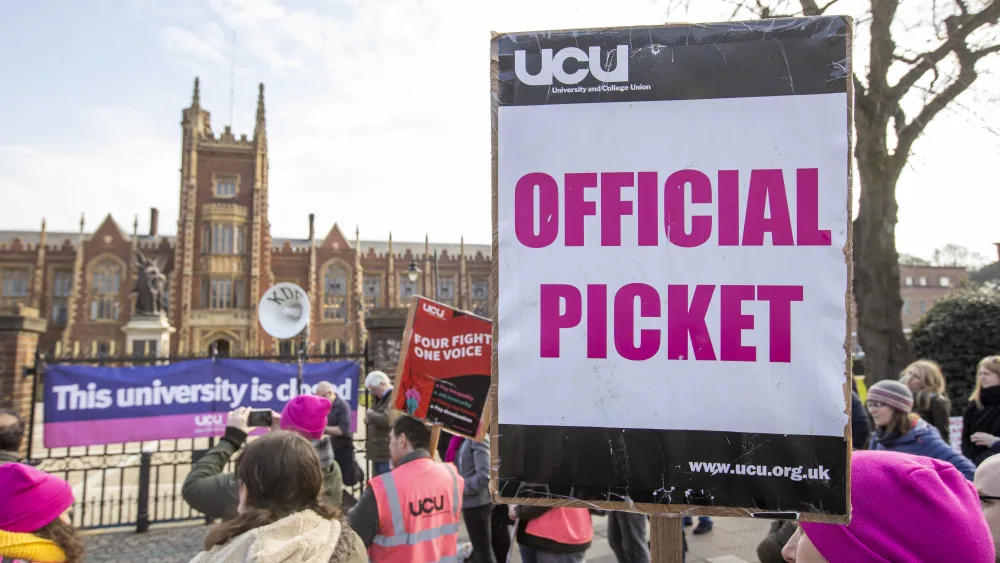
Since the exposure of the financial crisis within the university, more than 800 jobs have been cut, with plans for a further 154 announced earlier this year.
Prof Seaton said the need for the cuts was not because of action by staff, but previous management, adding: “I can’t tell you how much I regret how we’ve had to reduce the staffing levels.
“The staffing levels have been reduced by almost a third, which is an astonishing number, but it reflects how very substantially over-staffed we were before and that’s what we’re dealing with.
“We’re a people-based organisation, most of our expenditure is on people and so, very sadly, most of the reduction in expenditures had to come from staffing.
“Once we’ve done this, the university’s future will be secure and that’s what we’re focusing on now.”
Earlier on the same programme, Dr Melissa D’Ascenzio, the co-chairwoman of the local UCU branch, said: “The university has no way of knowing, in fact, how many lectures and tutorials and seminars will be impacted,” she said.
“I feel this statement is more wishful thinking than an actual reflection of reality.
“Our members are more determined than ever to fight against compulsory redundancies.
“While disrupting semester one is extremely regretful, you have to understand that some of our members are still in redundancy pools and they are really worried about their future, their career, their livelihoods.
“Some members that are not in a redundancy pool at this moment are really worried about increasing workload and about the future academic provision of the university, so there is a very strong resolution in our branch to take action.”