


Some senior school staff are working up to 80 hours a week, MSPs were told, as union leaders insisted reducing the hours teachers spend in lessons will “not be a panacea” for all the problems in schools.
While the Scottish Government agreed a deal that will reduce the amount of time teachers spend in the classroom by 90 minutes a week – averting the threat of strike action in schools – both the EIS and School Leaders Scotland warned this will not solve all the issues teachers face.
When the cut in teaching hours was announced in March this year, hopes were expressed that the move would reduce teachers’ workload and give them more time to spend on other parts of their job, such as preparing for lessons and marking.
Andrea Bradley, general secretary of the EIS union, said research they had carried out in 2024 showed teachers working an average additional 11.5 hours – an extra day and a half – every week over and above their 35 contracted hours.
This is not the only challenge facing Scottish education at the moment, not the only challenge facing our teachers, and we believe that this reduction in class contact will not be a panacea to all of that
David Barnett, general secretary of School Leaders Scotland – which represents head teachers, deputy heads, faculty heads and principal teachers – said some of their members were working more than double their contracted hours.
He told MSPs on Holyrood’s Education Committee that the union’s workload report last year showed senior school staff working an average of 53.3 hours a week.
“Some are reporting workloads of 70 to 80 hours,” Mr Barnett told the committee.
Adding that evidence from across the countries in the Organisation for Economic Co-operation and Development (OECD) showed that teachers in Scotland have “amongst the highest number of contact hours in Europe”, Mr Barnett said: “It’s very clear that we see a need for a reduction in class contact time.
“It isn’t a panacea to every issue, but it is a start, and it is something that will be welcomed.”
His comments were echoed by Ms Bradley, who said teachers had been raising concerns over workload for the last 15 to 20 years.
She added: “Teachers are not only saying to us that workload derived from class contact time is a problem, they are also telling us that they are struggling with the under-resourcing of additional support needs provision in schools also.

“They are telling us they are struggling because Scotland has amongst the highest class sizes in the OECD, we’re something like the third highest in terms of class size.
“They are also struggling more recently because of the trends we have seen in regards to dysregulated, challenging, violent, aggressive behaviours amongst children and young people, for a whole host of reasons, not least of which will be the fact that more than 25% of our school population are living in poverty, and that has significant impacts on mental health, ability to regulate behaviour.”
Ms Bradley added that teacher workload “was not the only challenge facing Scottish education at the moment, not the only challenge facing our teachers”.
She told the MSPs: “We believe that this reduction in class contact will not be a panacea to all of that.”
However, she said the reduction in class time, from 22.5 hours a week to 21 hours a week, was a “step in the right direction”.
The EIS general secretary added: “It is a good step in the right direction and we believe it is going to have benefits for teachers, which in turn will have benefits for children and young people.”
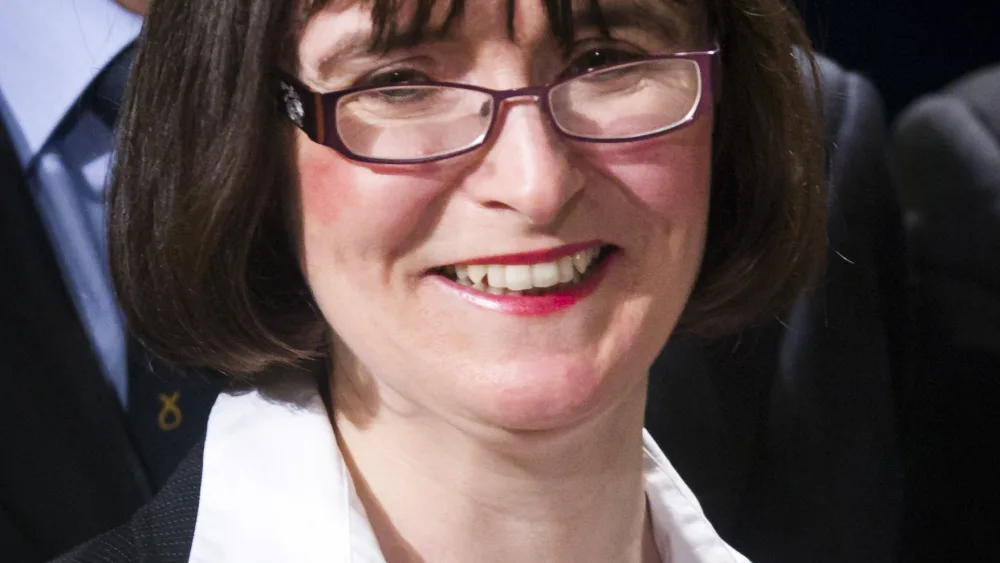
Both Ms Bradley and Mr Barnett rejected a suggestion from MSP Patricia Gibson – a former English teacher – who suggested teachers taking up jobs in either subjects or areas where there is a shortage of staff should be given a higher pay rate.
She proposed this to help tackle what she described as “chronic subject specialism shortages” in “really key areas like physics, chemistry, English, maths”.
As a result, she suggested “offering differentials in pay for very hard-to-fill locations and subjects”.
Mr Barnett, however, told her that having “different teachers being paid at different rates could be very divisive”.
Meanwhile, Ms Bradley said the MSP was “looking to apply raw market forces to what is a public sector endeavour” for “publicly-funded, publicly-provided education in Scotland”.
She said this was “organised in such a way as to recognise every teacher in Scotland, regardless of the age and stage they are teaching, the subject they are teaching, is equally qualified”.
The EIS general secretary added: “I think that to introduce pay differentials would be problematic, depending on how that landed, you could end up with equal pay claims.”