

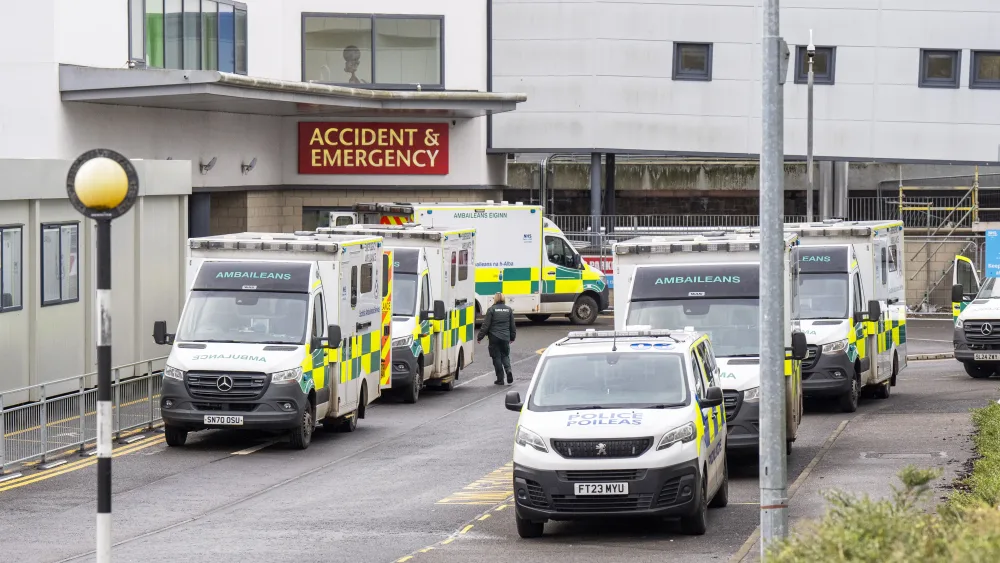
Scottish Liberal Democrats leader Alex Cole-Hamilton has vowed to make health and social care a priority issue in upcoming Budget negotiations with SNP ministers – warning without improvements to care winter will see “ambulances stacking up outside of A&E”.
Mr Cole-Hamilton conceded his party had taken “a bit of a risk” by doing deals with the SNP in previous budgets.
But he insisted by doing so they had “achieved billions of pounds worth of commitments on Liberal priorities” such as colleges, schools and social care.
With First Minister John Swinney heading a minority administration in the Scottish Parliament, the SNP will once again need to seek support from rival parties to get its Budget – due to be unveiled on December 3 – passed.
If we don’t fix social care we are going to see this winter ambulances stacking up outside of A&E, unable to discharge their patients
Mr Cole-Hamilton said that in the past two years “mature and reasoned argument and negotiation by the Lib Dems” had resulted in additional funding for the party’s priority areas, including “things like like colleges, our NHS, on schools, on social care”.
And while his party is the smallest in Holyrood, with 10 MSPs, he pointed out they were also “just seven seats behind the second parties in the chamber” – with both Labour and Reform having 17 MSPs.
The Lib Dem added: “We have never been that close to power before and we’re going to use that influence to great effect.”
Speaking on BBC Scotland’s Sunday Show, Mr Cole-Hamilton said it “was a bit of a risk” for his party to support previous Scottish budgets.
“People were saying ‘if you back the SNP budget are you not tainted by their failures in government?’,” he added.
But he said the deals done had been a way of “unpicking the damage” he said had been caused by SNP ministers.
Pledging to “move forward in good faith in that spirit into this Parliament”, he said priorities for the Liberal Democrats in upcoming Budget talks included “getting Scotland moving again, fixing our roads, fixing our ferries” as well as action on “lifting up Scottish education” and tackling the cost of living.
But “in particular” he said Lib Dems want measures “addressing the crisis in our NHS” in the forthcoming Budget.
First Minister John Swinney has already set out plans to cut the number of regional health boards in Scotland from 14 to just two.
Mr Cole-Hamilton, however, insisted issues with the NHS were “not about health board reorganisation”.
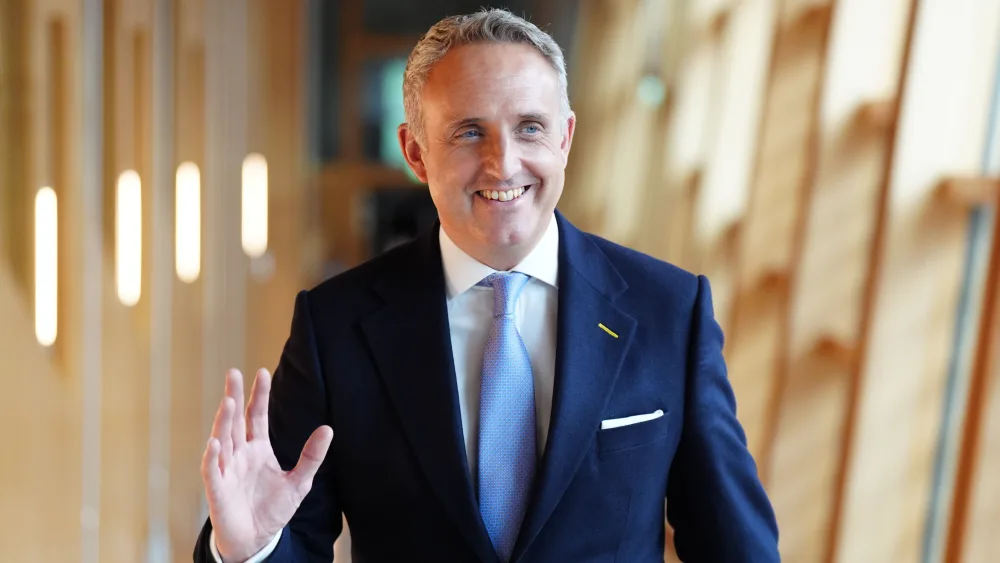
Instead he said problems were linked to the number of Scots stuck in hospital despite being medically well enough to go home, with patients waiting for care packages to be put in place.
“On any given night in Scotland there are 2,000 Scots stuck in our nation’s hospitals, well enough to go home but too frail to do so without a social care package,” the Lib Dem said.
“If we don’t fix social care we are going to see this winter ambulances stacking up outside of A&E, unable to discharge their patients .
“These are the priorities we will be fighting for and of course they will be reflected in the asks we make of the Government as we discuss the forthcoming Budget.”
And while Mr Cole-Hamilton is now the longest serving leader of all the political parties at Holyrood he also insisted he has “still got a lot of gas in the tank”.
He took on the post in 2021 and insisted he would stay in the job “as long as my party will have me”.
Following Mr Cole-Hamilton’s comments, a spokesperson for the Scottish Government said it is delivering on health and care, and investing a record £22.5 billion in 2026-27, which it will continue to build on over the course of this Parliament.
“We have exceeded our target across Scotland to deliver 150,000 extra appointments and procedures in 2025-26. Long waits are reducing and we have increased the number of operations and GPs in the past year,” a Scottish Government spokesperson said.
“Consultation has begun on social care reform, and we recently published details of a new national plan for hospital flow which will bring together the Scottish Ambulance Service and health boards to build on important work to reduce waits for patients, reduce people going to hospital unnecessarily and ease A&E pressures.”