


Children reach peak boredom by the third week of the summer holiday, a study has found – but one expert has advised parents to treat it as an opportunity to spark creativity and family connection.
According to research by ScotRail, by the midway point of the holiday parents hear the words “I’m bored” four times a week and rely on screens three times a week to keep children occupied.
The study of 1,000 Scots parents found almost 40% worry about their children being bored up to six times a week during the school break – almost once a day.
Nearly one in 10 say their children complain they are bored daily.
Parents said boredom is at its highest halfway through the third week of the summer break, as the novelty of the holidays begins to wear off.
They admit they turn to phones, tablets or television three times a week to keep children occupied, with almost a third saying they rely on screens almost every day.
Parents can often feel under pressure to fill every hour of the summer holidays with activities, but children benefit from quieter moments too
However for youth mental health psychologist Dr Rebecca Johnson, boredom gives children the chance to discover things they are passionate about.
“Boredom isn’t a problem to solve – it’s an opportunity,” she explained.
“Boredom is a signal, it allows children to look at things, be more creative, and the more young people think about ‘what do I want to do’, the more they learn about themselves, develop a strong sense of self, and find things that they’re passionate about.
“Parents can often feel under pressure to fill every hour of the summer holidays with activities, but children benefit from quieter moments too.
“Learning to tolerate boredom helps build resilience because it teaches children that uncomfortable feelings don’t always need an immediate fix.”
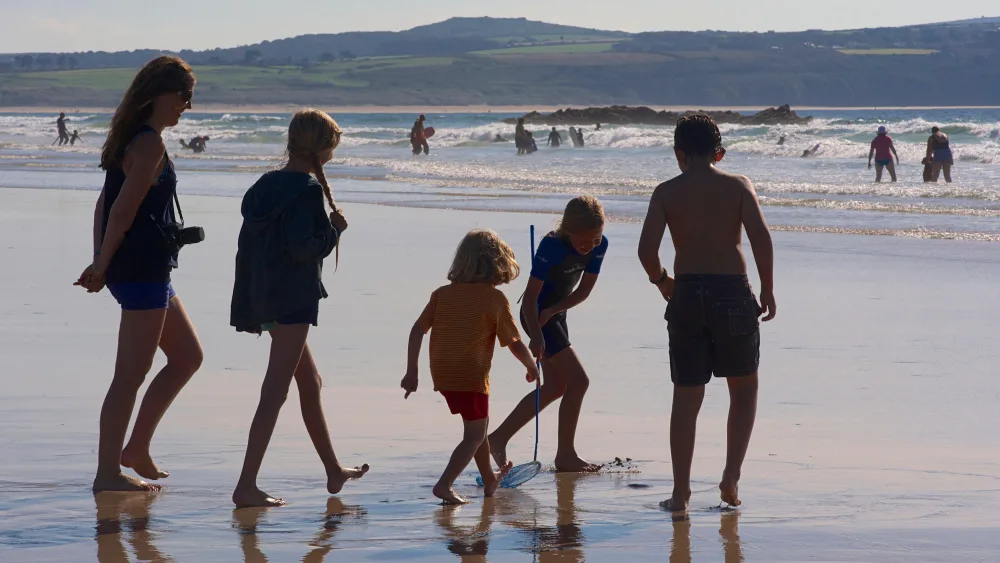
As an alternative to screens, ScotRail has put together a “bucket list” of family-friendly destinations that are accessible by rail.
The list ranges from beaches and castles to museums, wildlife parks, country parks and bustling cities, with the rail operator saying it offers hundreds of opportunities for screen-free days out where children can discover somewhere new, let their imaginations run free and create lasting memories.
Claire Dickie, ScotRail commercial director, said: “It’s a huge challenge keeping children entertained throughout the long summer holidays, especially once the excitement of the first couple of weeks starts to fade.
“Our research shows many families naturally turn to screens, but sometimes the best adventures begin by simply getting out and exploring somewhere new together.
“Whether it’s a trip to the seaside, a visit to a museum or discovering somewhere your family hasn’t been before, travelling by train gives everyone the chance to relax, spend quality time together and enjoy the journey as much as the destination.
“Our Kids for a Quid tickets make family days out even more affordable, helping parents create memorable experiences across Scotland without spending a fortune.”
Dr Johnson added: “Connection matters much more than constant entertainment.
“Whether it’s chatting on a train, playing cards together, exploring somewhere new or simply looking out of the window, children are much more likely to remember how they felt than how expensive the day out was.”
ScotRail’s Kids for a Quid tickets allow up to four children aged five to 15 to travel for £1 return each when accompanied by a fare-paying adult.
More information about ScotRail destinations can be found at scotrail.co.uk/bucket-list.
The survey of 1,000 Scottish parents with children aged five to 15 was carried out between June 16 and 19.