

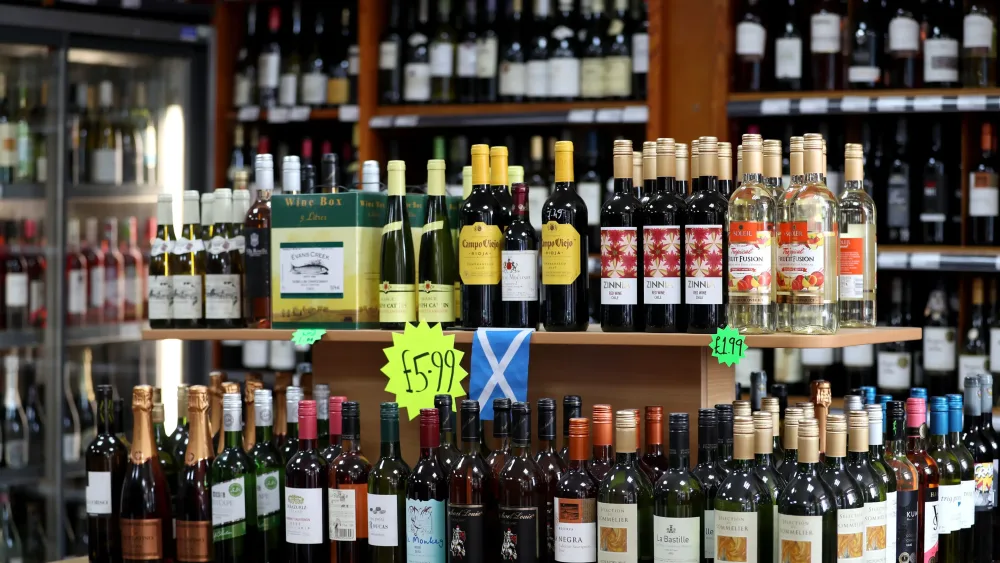
The amount of alcohol bought by Scots has decreased by nearly a fifth since 2017, figures have shown.
However, stark health inequalities remain, with deaths wholly attributed to alcohol six times higher in the most deprived areas.
Public Health Scotland figures show alcohol sales fell by 18.9% between 2017 and 2025, with 8.6 litres of pure alcohol sold per adult last year.
Despite the decrease, experts have warned that Scots are still drinking too much.
In 2025, the average adult drinker consumed 20.7 units of alcohol per week – significantly higher than the 14 units advised by the UK’s chief medical officer.
Those living in the poorest areas suffered the most from the impact of alcohol, the figures showed.
Deaths purely from alcohol in the 10% most deprived areas were nearly six times higher than in the 10% least deprived areas.
Hospital admissions attributed wholly to alcohol were more than seven times higher in the most deprived regions.
The figures also show that men are more than twice as likely to die wholly from alcohol or be admitted to hospital from it.
In total, Scotland saw 27,126 hospital admissions purely from alcohol in 2024/25.
In 2024, 1,179 people in Scotland died from a cause wholly attributable to alcohol – an average of almost 23 people per week.
Research has estimated that our minimum unit pricing (MUP) policy has saved hundreds of lives and is likely to have averted hundreds of alcohol-attributable hospital admissions
This is a decrease from the 1,272 people who died in 2023 but the same rate as 2016 at 20.8 deaths per 100,000 people.
Most alcohol sold in Scotland continues to be purchased from supermarkets and off-licences.
In 2025, 76% of all alcohol sales were through the off-trade – up from 73% in 2017.
While off-trade sales have fallen over that period, sales in pubs, bars and restaurants have declined even more sharply, increasing the off-trade’s share of the market.
Dr Andrea Mohan, an expert in alcohol harms from the University of Dundee, said Scots were still drinking too much.
She said: “The latest update shows that while the amount of alcohol sold per adult in Scotland in 2025 was lower than 2024, the amount of alcohol that adult drinkers consume is still higher than the recommended UK guidance of 14 units per week.
“As has consistently been the case for years, this risky level of consumption has the greatest impact on people from the most deprived areas of Scotland and on men.
“There also continues to be severe economic strain caused by alcohol harms, with just over 27,000 inpatient hospital stays because of causes that are fully preventable.”

Dr Mohan said the figures showed the need for the Scottish Government to prioritise ring-fenced funding to tackle Scotland’s alcohol emergency.
She added: “Crucially, what the hospital admissions figures show is that people most at need of alcohol treatment and support are not identified early enough.
“There needs to be a specific focus on how specialist services can be boosted to reach people most at risk of harm through interventions such as assertive outreach and managed alcohol programmes.”
Maree Todd, the minister for alcohol and drugs, said she welcomed the figures showing a decline in alcohol deaths, hospital admissions and the amount of alcohol purchased by Scottish people.
She said: “We are determined to build on progress in tackling alcohol harms, widening access to treatment, including residential rehabilitation and providing record levels of funding, including a new alcohol and drugs fund, which will provide £36.9 million to frontline services and organisations.
“Our new strategic plan maintains support for residential rehabilitation with a focus on improving pathways into and from services, including through detox, crisis care and stabilisation. We will also trial the use of new hospital alcohol care teams.
“Research has estimated that our minimum unit pricing (MUP) policy has saved hundreds of lives and is likely to have averted hundreds of alcohol-attributable hospital admissions.”